Commemorating the Pointe-Claire Residents Who Died Serving in the Second World War
I co-authored this note while I was President of the Pointe-Claire Heritage Society. It was last shared on Facebook three years ago, so I thought readers of my website might also be interested.
Commemorating the Pointe-Claire Residents Who Died Serving in the Second World War
According to the Canadian census, Pointe-Claire had 4,536 residents in 1940, the great majority of them francophone. In August 1940, every resident over the age of 16 was required to report to the town hall to answer an 18-item questionnaire and register. Each one received an identification card that, among other things, made them eligible for the draft. Several hundred Pointe-Claire men served in the Royal Canadian Air Force, the Canadian Army and the Royal Canadian Navy, and 12 of them made the ultimate sacrifice. Most are buried in Europe, in places such as Cassino and Normandy.
Our information comes from personal archives, newspaper reports, Brian Matthews’ history of Pointe-Claire and the Canadian Virtual War Memorial. It is incomplete and in places contradictory. If you can correct or add to what we know about the veterans in your family, or share photographs, letters or other material, please contact us. We will make sure it is included when we repost this text on future Remembrance Days, and we can add photos to this album so that it serves as a public archive.— Peter Tijssen and Andrew Swidzinski
James Campbell (Pilot Officer), Royal Air Force, age 20. Son of Robert D. and Helen Campbell of Lakeside. He died on November 7, 1939, when the plane he was flying crashed in severe weather in southern England. He is buried in Bensington Churchyard, Oxfordshire, United Kingdom. Service number: 41345.

Thomas Francis Crozier Lucas (Leading Aircraftman), Royal Canadian Air Force, age 28. He was the son of the Rev. John Henry Lucas and Anna E. Lucas of The Rectory, Moy, County Tyrone, Northern Ireland, and lived with his brother, J.E. Lucas, at 29 Brunet in Pointe-Claire. He died on December 5, 1940, in a collision while attempting to land at the RCAF flight school in Malton, Ontario. Service number: R/77062.

George Patterson Christie (Squadron Leader), Royal Air Force, age 24. The son of a McGill professor, George “Pat” Christie became a flying ace. He fought in the Battle of Britain and flew many other missions over the United Kingdom, Western Europe and the Mediterranean. He was credited with downing at least eight enemy aircraft. One of them was an Italian Fiat bomber that he intimidated into crashing into the sea even though his own guns had failed. He was awarded the Distinguished Flying Cross, followed by a Bar to the DFC on January 14, 1941. He survived several crash landings and bailed out of aircraft over Europe more than once. Telling Montreal high school students about parachuting into the Thames, he remarked that “salt water isn’t so nice when there is no skin on your face, arms or legs.” Tragically, he died after returning to Canada. On July 5, 1942, the Hudson bomber he was flying crashed into Lac Saint-Louis just off Windmill Point. He is buried in Lakeview Memorial Cemetery. Service number: 40081.


James Gethings Stewart (Pilot Officer), Royal Canadian Air Force, age 20. Son of Allan Gethings Stewart and Kathleen Betty Stewart (née Shaw) of 11 Golf Avenue, Pointe-Claire. He was the wireless operator on an aircraft that crashed during a night training exercise on August 12, 1942. He is buried in Pershore Cemetery, Worcestershire, United Kingdom. Service number: J/9881.


Lionel Chartrand (Trooper), 17th Duke of York’s Royal Canadian Hussars (7th Reconnaissance Regiment), Royal Canadian Armoured Corps, age 21. Son of Leopold and Edouina (Legault) Chartrand of 86 Victoria, Pointe-Claire. He died of illness on August 17, 1942, while stationed in the United Kingdom. He is buried in Brookwood Military Cemetery near London. Service number: D/63142.

Grover Stewart Sargent (Flying Officer), Royal Canadian Air Force, age 21. Son of Grover S. and Louise Sargent of 23 Claremont, Pointe-Claire. He died in an accident at RCAF Station Boundary Bay, British Columbia, on February 4, 1943. He is buried in Lakeview Memorial Gardens. Service number: J/11976.

Dudley Sydney Champion (Sergeant), Royal Canadian Air Force, age 21. He was awarded the Defence Medal, the War Medal 1939–1945 and the Canadian Volunteer Service Medal and Clasp. He went missing on an air operation on October 2, 1943. His name is inscribed on the Runnymede Memorial at Englefield Green, near Egham, about 32 kilometres west of London. It appears alongside the names of some 20,450 other airmen lost on raids, sorties and other operations over the North Sea and Western Europe. Their remains were never recovered, and they have no known grave. Service number: R/164692.


John William Mallison (Lieutenant), Royal Canadian Artillery, age 34. He was the son of John and Harriet Mallison of Cornholme, Yorkshire, and lived on St. John’s Road in Pointe-Claire. After being commissioned as an officer, he served as an instructor at Valcartier before deploying overseas in 1942. He died of wounds on December 21, 1943. He is buried in Moro River Canadian War Cemetery, in the commune of Ortona, province of Chieti, Italy, among the 1,375 Canadian dead of the Battle of Ortona. In that battle, the 1st Canadian Infantry Division fought elements of the elite German 1st Parachute Division in brutal street-by-street combat for this small town near the Adriatic.

Dieudonné Adrien Lauzon (Corporal), Calgary Regiment, Royal Canadian Armoured Corps, age 28. He was wounded around January 1944 and killed in action on May 15, 1944. He is buried in Cassino War Cemetery, about a kilometre below the mountaintop Abbey of Monte Cassino. The Germans had made these heights the key point of their Winter (Gustav) Line. Between January and May 1944, they were the scene of some of the bloodiest fighting on the Italian front, as Allied troops fought to break through and take Rome. Service number: D/36535.

Herbert Dellar (Sergeant), Elgin Regiment, Royal Canadian Armoured Corps. He was killed in action on August 14, 1944. He is buried in Bretteville-sur-Laize Canadian War Cemetery, Calvados, Normandy. Some 3,000 Allied soldiers lie there, killed during the breakout from the Normandy beachhead, the capture of Caen and the encirclement of German Army Group B in the Falaise Pocket. Service number: D/77567.

Gérard William Larocque (Gunner), 5th Anti-Tank Regiment, Royal Canadian Artillery, age 25. Son of William and Aurore Larocque. He was killed in action on August 28, 1944, and is also buried in Bretteville-sur-Laize Canadian War Cemetery. Service number: D/157530.


Maxime Joseph Gamelin (Private), Royal Canadian Army Service Corps. Maxime Joseph Gamelin was Pointe-Claire’s last casualty of the war. He was born on November 27, 1919, in Kingston, Ontario, and lived at 233 Lakeshore Road in Pointe-Claire. A driver in civilian life, he enlisted in June 1940 at the age of 20, before conscription. He joined the 2 Corps Car Company of the Royal Canadian Army Service Corps.
His unit took part in Operation Veritable, also known as the Battle of the Reichswald. It was fought from early February to mid-March 1945 to breach the German defences west of the Rhine, just across the border from Nijmegen in the eastern Netherlands. The First Canadian Army under Lieutenant-General Harry Crerar led the operation, with the British XXX Corps under Lieutenant-General Brian Horrocks placed under its command. Both formed part of Field Marshal Bernard Montgomery’s Anglo-Canadian 21st Army Group. Some 200,000 men, 20,000 vehicles and 1,100 guns were committed, supported by heavy bombing. After the war, Eisenhower called it “some of the fiercest fighting of the whole war” and “a bitter slugging match in which the enemy had to be forced back yard by yard.” Montgomery wrote that “the enemy parachute troops fought with a fanaticism unexcelled at any time in the war.” He added that “the volume of fire from enemy weapons was the heaviest which had so far been met by British troops in the campaign.”
Maxime was one of 15,635 Allied casualties. The Germans began with only about 90,000 men and lost roughly half of them killed, wounded or captured. Words cannot describe the ferocity of the tree-to-tree fighting, the attrition and the heroism of a battle that cost more than 50,000 casualties over less than 10 kilometres. Maxime was killed in action near the end of the offensive, on March 12, 1945. He was first buried in the Canadian military cemetery at Bedburg, Germany. His remains were later moved to Groesbeek Canadian War Cemetery near Nijmegen, Netherlands. The Groesbeek Memorial bears the words Pro amicis mortui amicis vivimus: “We live in the hearts of friends for whom we died.”
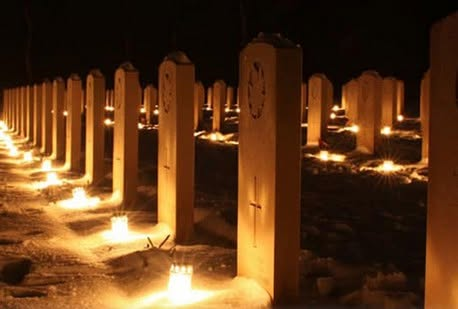
The Pointe-Claire Heritage Society makes sure Maxime is not forgotten. Each year, Henk Tijssen, brother of Society board member Peter Tijssen, lays flowers at his grave on Remembrance Day in November and on the Dutch Remembrance Day in May. Every Christmas Eve, local children place lights on all the graves. The names of Canada’s war dead are inscribed in the Second World War Book of Remembrance in the Memorial Chamber of the Peace Tower in Ottawa, where a different page is displayed each day. Maxime’s name appears on page 517, which is displayed on November 2.

Pointe-Claire During and After the War
What was life like in Pointe-Claire during the war? The town had long been a summer playground for Montrealers, and the outbreak of war brought many of its tourist and leisure activities to a halt. With so many young men away, the sailing season, regattas and dances were cancelled or scaled back. Movies played to half-empty halls, since people preferred to listen to the radio. Social clubs turned to fundraising and selling Victory Bonds to support the war effort. Civil defence was taken seriously, and groups travelled into the city twice a week for training, because the idea that war could reach Canada felt very real. A curfew signal at 9 p.m. reminded residents of the situation each night, and bus service was cancelled to save gasoline. When victory in Europe was announced in May 1945, celebrations, concerts and dances were held throughout the town and its parks.
The war continued to shape Pointe-Claire after it ended and helped begin its transition from vacation town to suburb. Farmland in the northeast was bought to build low-cost homes for veterans under the Veterans’ Land Act, creating much of the neighbourhood we now know as Lakeside Heights. Regular commemorations continued at the Field of Honour and among the members of the new Pointe-Claire Legion branch, founded in 1945. They also took place at the cenotaph erected at Pointe-Claire’s new City Hall in October 1960. The Legion donated the monument, and Magil Construction built its foundation.

From 1961 to 1998, Pointe-Claire was led by three consecutive mayors who were Second World War veterans: Arthur Séguin, David Beck and Malcolm Knox. As captain of the Montreal Amateur Athletic Association water polo team, Knox led it to the 1939 Canadian junior championship. He would have taken the team to the 1940 Olympics had the war not intervened. He joined the Royal Canadian Navy and eventually served as a lieutenant commander in motor torpedo boats in the English Channel. He took part in the Normandy invasion and was one of only 199 Canadians awarded the Distinguished Service Cross for gallantry.

We will remember them.

